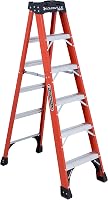
How to Level a Ladder on Uneven Ground
Level a ladder on uneven ground with a leveler made for that ladder type, installed as directed, then check that every foot is firm before climbing. If you can't get a stable setup, move the ladder or use another safe access method.
On this page (8 sections)
To level a ladder on uneven ground, use a leveler approved for that ladder type, follow its setup instructions, and confirm every foot is firmly supported before climbing. If the ground is soft, loose, or too steep to make a stable setup, move to a safer spot.
A ladder leveler can help adjust for a height difference, but it can't fix an unstable surface. Never raise one side with loose boards, bricks, or stacked objects that can shift under load.
How do you level a ladder on uneven ground?
Set the ladder on the firmest, most level ground available first. If the surface still creates a height difference, use a compatible leveling device only if the ladder and leveler instructions allow it.
- Clear loose debris, mud, ice, and other material from the ladder's footing area.
- Place the ladder on a firm surface and check for rocking or slipping.
- Install or adjust an approved leveler exactly as its instructions describe.
- Recheck that the ladder is stable and positioned as the ladder maker requires.
- Climb only if the setup stays firm, with no movement at the feet or leveler.
Don't climb to test an uncertain setup. If the ladder rocks or a foot sinks, get down and relocate it.
For a step ladder, open it fully and lock the braces as directed. For an extension ladder, follow the instructions for its required angle and secure placement.
When should you use a ladder leveler?
Use a ladder leveler only when it is made for your ladder and the instructions permit it. Some levelers fit extension ladders, while others are designed for specific ladder models or uses.
Check whether the leveler attaches securely to the rails, how it adjusts, and which surfaces it is meant to contact. A feature described for stairs or uneven surfaces doesn't mean every slope or ground condition is suitable.
The Xtenda-Leg ladder leveler is described for extension ladders and has adjustable height and rubber feet. Check that your extension ladder is compatible and follow the installation instructions.
Skip this type if you have a step ladder or your ladder's instructions don't permit the attachment. Don't assume a leveler is compatible based only on its appearance.
If you need a ladder for stairs, first read our guide to how to use a ladder on stairs. The right setup depends on the ladder type and the instructions for the equipment you have.
Can you put a board under a ladder foot?
No. Don't use loose boards, bricks, blocks, or scrap material to raise a ladder foot.
These can slide, split, tip, or shift when the ladder is loaded.
A solid-looking object can still move on dirt, gravel, or a sloped surface. Don't wedge material between a ladder foot and the ground, or attach a makeshift extension to a leg.
If an approved leveler isn't available or doesn't fit the ladder, move the ladder until all feet sit firmly on a suitable surface. If no safe position is available, use another access method.
What ground is too uneven for a ladder?
Ground is too uneven when the ladder can't stand securely with all feet supported. Soft soil, loose gravel, wet grass, sloped ground, and surfaces that shift under pressure can undermine a stable setup.
Clear small loose debris, but don't dig a makeshift platform or pile soil under one foot. A leveler may be unsuitable if its foot cannot rest securely or if the ground compresses under load.
Stop if you see a foot sinking, a leveler slipping, or the ladder rails shifting out of position. A ladder on a changing surface needs a different location.
How do you check a ladder after leveling?
Check the footing, leveler, and ladder position before each climb. The ladder should not rock, slide, or settle when you apply light pressure from the ground.
Make sure an adjustable leveler is locked or secured as its instructions specify. Confirm the ladder's braces or locks are engaged, and keep the feet clear of loose material.
Recheck if the ground changes, the ladder is moved, or the leveler shifts. Don't climb if you can't verify the setup.
For general setup guidance, see how to use a step ladder safely at home. Review how much weight a ladder can hold as well, and include your clothing, tools, and materials in the total load.
Which ladder works for a leveling job?
Choose the ladder for the task and surface, then use only an approved way to level it. A leveler doesn't make a ladder suitable for every job or ground condition.
For work that can be done from a stable, level floor, a stepladder may be simpler than setting up on uneven terrain. The Little Giant MightyLite is a fiberglass stepladder with a standing platform and wide textured steps; its instructions should guide where and how to use it.
Don't place a step ladder on uneven ground unless its maker provides an approved leveling method for that model. If you need help choosing a type, compare the options in what types of ladders are there.
For jobs requiring an adjustable ladder configuration, the Leveleve is described as a 17 ft multi-position ladder with a stabilizer bar. Its instructions call for keeping at least one double-layer step overlap, so follow that setup guidance and any other use limits.
A stabilizer bar does not replace firm footing or make every uneven surface safe. Don't use a ladder configuration or adjustment that conflicts with its instructions.
What should you do if the ladder still won't sit level?
Move the ladder or stop the job if it won't sit firmly after an approved adjustment. Don't climb a ladder that rocks, slips, or rests partly on an unstable object.
Look for a nearby firm, level location that still lets you reach the work without leaning. If moving the ladder changes what you can reach, choose a different ladder or access method suited to the job.
Before every climb, check the ladder's position, feet, locks, and any leveler. For a stable surface, a compatible leveler can address a height difference; for unstable ground, the safe choice is to relocate.
FAQ
Can you level a ladder with a board under one foot?
Don't use loose boards, bricks, or other improvised objects to raise a ladder foot. They can shift, tilt, or slip under load.
Use only a leveler or accessory approved for your ladder model, installed according to its instructions, and move the ladder if you can't make a stable setup.
Do ladder levelers work on uneven ground?
A ladder leveler can adjust for height differences when it is designed for the ladder and surface. Check the ladder and leveler instructions for compatibility, setup, and limits.
A leveler doesn't make soft, loose, sloped, or unstable ground safe; choose a firm, level location when possible.
Can you use a step ladder on uneven ground?
Use a step ladder only on firm, level ground unless its manufacturer provides an approved method for leveling that model. Keep all feet in contact with the surface and lock the braces as directed.
If the ground prevents a stable stance, move the ladder or use another access method.
How do you check if a ladder is level?
Check that the ladder stands as its instructions specify, with all feet firmly supported and no rocking or slipping. For an extension ladder, check the rails and angle as well as the footing.
Recheck after setup and if the surface, ladder, or leveler shifts.
Frequently asked questions
Can you level a ladder with a board under one foot?
Don't use loose boards, bricks, or other improvised objects to raise a ladder foot. They can shift, tilt, or slip under load.
Use only a leveler or accessory approved for your ladder model, installed according to its instructions, and move the ladder if you can't make a stable setup.
Do ladder levelers work on uneven ground?
A ladder leveler can adjust for height differences when it is designed for the ladder and surface. Check the ladder and leveler instructions for compatibility, setup, and limits.
A leveler doesn't make soft, loose, sloped, or unstable ground safe; choose a firm, level location when possible.
Can you use a step ladder on uneven ground?
Use a step ladder only on firm, level ground unless its manufacturer provides an approved method for leveling that model. Keep all feet in contact with the surface and lock the braces as directed.
If the ground prevents a stable stance, move the ladder or use another access method.
How do you check if a ladder is level?
Check that the ladder stands as its instructions specify, with all feet firmly supported and no rocking or slipping. For an extension ladder, check the rails and angle as well as the footing.
Recheck after setup and if the surface, ladder, or leveler shifts.