What Size Ladder Should I Buy for My Home?
Buy a ladder that reaches your work without putting you on a prohibited top step. Match its type and size to the job, check the label and reach guidance, and set it on firm, level ground.
On this page (7 sections)
The right ladder size depends on where you need to reach and what kind of work you’re doing. For common indoor tasks, compare a step stool or step ladder first; for a high exterior reach, consider an extension ladder sized and set up for that spot.
Don’t choose by ceiling height alone. Your feet stay below the top of a ladder, so the ladder’s height is not the same as your safe working reach.
This guide helps you narrow the type and size, check the label, and measure the space before buying. For more options by task, browse our best step ladders for home use.
What size ladder should I buy for common home jobs?
Start with the job’s working height, then choose a ladder that lets you reach it from an approved standing step. A compact stool can handle low, short tasks, while a step ladder suits many indoor jobs and an extension ladder can reach higher outdoor work.
Use these as starting points, not guaranteed matches. Your height, arm reach, tool use and the ladder’s label all affect the fit.
| Job | Ladder type to consider | What to check |
|---|---|---|
| Reaching a low shelf or cabinet | Step stool | Can you reach without stretching or standing on the top cap? |
| Changing a bulb or reaching a closet shelf | Step ladder | Can you work from an approved step with your body centered? |
| Painting walls and trim | Step ladder or platform ladder | Can you move along the work without leaning sideways? |
| Reaching a tall ceiling | Tall step ladder or suitable multi-position ladder | Does the setup fit the room and allow safe access? |
| Reaching an exterior eave or gutter | Extension ladder | Can it rest against a firm support at the required angle? |
| Working across different floor heights | Ladder designed for the configuration | Does the ladder’s label allow that setup? |
A ladder that is too short may tempt you to climb onto its top cap or reach far to one side. A ladder that is too large can be hard to move and place safely indoors.
For a quick view of how step-ladder height relates to reach, see our step ladder height chart.
Which ladder type fits your job?
Choose the ladder type by the surface and position where you’ll work. Step stools and step ladders stand on their own; extension ladders lean against a support, while some multi-position models can be arranged in approved configurations.
Is a step stool enough for low work?
A step stool can suit short, low tasks such as reaching a cabinet or closet shelf. It offers less height than a full step ladder, so check that you can reach the work without stretching or standing on a surface the label prohibits.
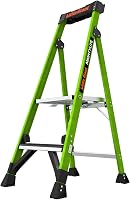
Its aluminum frame, folding design and integrated tray may suit a home where storage space is limited and you want a place for small items while working. Check the unit’s maximum height and the label’s safe standing instructions before deciding whether it reaches your task.
For other compact options, compare our best 3-step ladders for kitchens and closets.
When should you choose a step ladder?
A step ladder stands on its own when fully opened and locked. It fits many home jobs where you need to work at moderate height without leaning a ladder against a wall.
This step ladder has slip-resistant rubber feet and a molded top with tool slots. Its stated capacity includes your weight and tools, so count both when checking whether it fits your needs.
For taller ceilings, compare the options in our best ladders for high ceilings guide. If you’re deciding between materials, see aluminum or fiberglass step ladders.
When does a multi-position ladder make sense?
A multi-position ladder can suit jobs that need different approved configurations, such as a step-ladder setup or an arrangement for stairs. Confirm the manufacturer allows the setup you need, and follow its instructions for opening, locking and placing the ladder.
This aluminum model has two balance bars and is described as supporting a 300 lb load. Its maximum height is 47 in, so check the exact configuration and working reach for your intended task rather than assuming the name’s 14 ft describes every setup.
For stair work, read our guide to using a ladder on stairs and check the ladder’s instructions before climbing.
When do you need an extension ladder?
Choose an extension ladder when the work is high and the ladder can rest against a suitable support. It must extend to the needed access point while following the ladder’s setup guidance and leaving a stable base.
Its MAXLOCK rung lock and QuickLatch system are features for securing the ladder sections. The ladder’s overall height does not tell you the exact height you can safely reach from it, so use the label and setup instructions to plan the job.
How do I estimate the ladder reach I need?
Estimate reach from your working position, not from the ladder’s full height. You should be able to reach the work while standing on an approved step and keeping your body between the rails.
For step ladders, manufacturers commonly distinguish ladder height from safe standing height and estimated reach height. Check the specific model’s label or instructions for those values, since a general chart cannot account for every person or task.
For extension ladders, the angle and overlap of the sections affect how high the ladder reaches. Its top should extend to the access point as instructed, and the base needs a stable place to rest.
Before buying, write down:
- The height of the surface or area you need to reach.
- Whether you’ll work from a step ladder, stool, multi-position ladder or extension ladder.
- The ladder’s safe standing or setup guidance.
- The space available for opening or leaning it.
- Your weight plus clothing, tools and materials.
If the work involves a ceiling, compare the actual ladder’s reach guidance with the ceiling height. Our guide to a ladder for a 12 ft ceiling covers that specific case.
How do ladder rating and load capacity affect size?
The ladder’s duty rating and capacity must cover you, your tools and anything you carry. A taller ladder does not automatically have a higher capacity, so check the label on the model you plan to buy.
A ladder type rating describes its intended load class. Do not treat the rating as extra capacity for tools: the stated maximum load includes the user and carried items.
Measure your likely load before choosing. If you carry paint, a drill or supplies, include them along with your clothing and footwear.
See our guide to ladder weight capacity for help reading load limits, and our guide to Type 1A ladders for one common duty rating.
What should I measure before buying?
Measure the work area and the route to it before choosing a ladder. A ladder that fits the height may still be too wide to open in a hallway or too long to move through a doorway.
Check these points:
- Working height: Measure the shelf, ceiling, wall or outdoor access point.
- Floor space: Allow room to open the ladder fully or set the extension ladder at its required angle.
- Ceiling and obstacles: Check lights, fans, door swings, pipes and shelves around the work area.
- Storage: Measure the folded ladder and the space where you plan to keep it.
- Route: Check doorways, corners and stairs between storage and the job.
- Surface: Confirm you have firm, level footing or a suitable support for the ladder type.
If the ladder will be used near a stairway, uneven floor or sloped area, do not improvise a setup. Follow the ladder’s instructions and use only a configuration the manufacturer allows.
How do I use the ladder size safely?
Use the ladder only in the configuration and on the surfaces allowed by its label and instructions. A good size still needs correct setup: inspect it, open or extend it fully, engage its locks and keep the base stable before climbing.
The Occupational Safety and Health Administration advises users to inspect ladders for defects and use them on stable, level surfaces. Its workplace guidance also says not to use the top step of a step ladder as a step.
Read the label and follow the instructions for your model and setting.
Do not reach far to the side to finish a task. Climb down and reposition the ladder instead.
For a fuller home checklist, read how to use a step ladder safely. For electrical work, follow the instructions for the equipment and work area, and keep away from hazards.
What size ladder should I buy for my home?
Choose a step stool for low tasks, a step ladder for many indoor jobs, and an extension ladder for high exterior access. Pick the size by working height and safe standing guidance, then confirm the load rating, setup space and label.
If you mainly need indoor access, start with our best step ladders for home use. For high ceilings, compare the ladder options for tall rooms before you buy.
Sources
Frequently asked questions
What size ladder should I buy for an 8 ft ceiling?
For many indoor tasks around an 8 ft ceiling, start by comparing a 4 ft or 6 ft step ladder, then check the ladder’s safe standing height and your own reach. The right size depends on the task, such as changing a bulb or painting, and you should never stand on a prohibited top step.
How tall should a step ladder be for painting?
Choose a step ladder that lets you reach the work while standing on an approved step, with your body centered between the rails. A 6 ft step ladder can suit some wall and trim jobs, but ceiling height, your reach and the label’s standing guidance all matter.
How do I choose a ladder for stairs?
Use only a ladder designed and approved for stair use, and follow its setup instructions for that configuration. A multi-position ladder may offer stair configurations, but check that each lock is engaged and the base is stable before climbing.
What ladder rating do I need?
Choose a duty rating that covers your full load, including your body weight, clothing, tools and materials. Check the ladder’s label for its capacity and rating, and compare the type ratings in our Type 1A vs Type 1AA ladder guide.
Can I use an extension ladder indoors?
An extension ladder can reach high work, but it needs a suitable support point and the setup required by its label. For ordinary indoor tasks, a step ladder is often easier to position; choose an extension ladder only when its reach and setup fit the job.