Do Fiberglass Ladders Expire?
Fiberglass ladders don't have one universal expiration date. Age alone doesn't tell you whether one is safe; inspect its condition, follow the manufacturer's instructions, and take damaged ladders out of service.
On this page (8 sections)
- Do fiberglass ladders expire?
- What affects fiberglass ladder life expectancy?
- What should you inspect before climbing?
- When should you retire a fiberglass ladder?
- Do ladders have expiration dates?
- Which fiberglass ladder features may help with regular use?
- How should you store and care for a fiberglass ladder?
- How can you decide whether an older fiberglass ladder is safe?
Fiberglass ladders don't have one universal expiration date. Age alone doesn't determine whether one is safe to use; inspect its condition, follow the manufacturer's instructions, and remove it from service if you find damage or instability.
A ladder's service life depends on how often and how heavily it's used, how it's stored, and whether it has suffered impact or wear. For fiberglass, also watch for cracks, splinters, or exposed fibers in the rails.
Do fiberglass ladders expire?
No single calendar age applies to every fiberglass ladder. Check the ladder's labels and the manufacturer's inspection and care instructions for guidance specific to that model.
A ladder can become unsafe before it seems old if it has been dropped, overloaded, exposed to harsh conditions, or used with damaged parts. A well-cared-for ladder still needs inspection before each use.
If you can't tell whether damage affects the ladder's strength, don't climb it. Contact the manufacturer for advice about that model or replace it.
What affects fiberglass ladder life expectancy?
Use, storage, and damage all affect how long a fiberglass ladder remains serviceable. Frequent work, rough handling, exposure, and poor storage can wear parts or conceal damage.
Keep the ladder clean and dry, and store it as its manufacturer directs. Avoid leaving it where vehicles, falling objects, or other equipment could strike it.
Fiberglass can also deteriorate at the surface. If you notice fibers coming loose, follow the manufacturer's care instructions and see how to stop a fiberglass ladder from shedding.
What should you inspect before climbing?
Check the rails, steps, feet, spreaders, and hardware before each use. Look for damage, looseness, missing parts, or anything that keeps the ladder from opening and standing as intended.
Pay close attention to fiberglass rails and their connection points. Don't climb if you see cracks, deep cuts, splits, exposed fibers, or a bent or loose component.
Set the ladder on firm, level ground, then confirm it stays stable. Our guide to using a step ladder safely at home covers setup and safe climbing habits.
Can a fiberglass ladder be used after a fall?
Don't use a ladder after a fall until it has been checked according to the manufacturer's instructions. An impact can cause damage that isn't easy to see.
Inspect every rail, step, joint, and foot, but don't rely on a visual check if the manual calls for a more specific procedure. If you can't confirm it's safe, contact the manufacturer or retire it.
When should you retire a fiberglass ladder?
Take a fiberglass ladder out of service if it has structural damage, missing parts, unstable feet, or hardware that no longer works properly. Don't use a ladder with cracked rails, damaged steps, or loose joints.
Mark or separate a damaged ladder so someone else doesn't use it by mistake. Follow the manufacturer’s instructions for disposal or replacement.
A worn rubber foot can affect stability, but replacement parts must be made for that ladder and installed as directed. Don't substitute an improvised part or keep using a ladder that rocks.
Do ladders have expiration dates?
Some ladders may carry date or inspection information, but there isn't a universal expiration date for every ladder. Read the labels and follow any inspection schedule or replacement guidance from its manufacturer.
A date by itself doesn't confirm the ladder is safe today. Inspect the actual ladder and consider how it has been used and stored.
For climbing, choose a ladder with a load capacity that covers your weight plus clothing, tools, and materials. See how much weight a ladder can hold for help understanding capacity labels.
Which fiberglass ladder features may help with regular use?
A ladder's condition matters more than its age alone, so choose a model that fits the work and is practical to inspect and store. These fiberglass step ladders have features that may suit different household jobs.
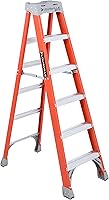
The Louisville FS1506 has 300 lb capacity, rubber tread on all four legs, and a molded top with tool slots.
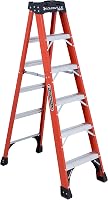
The DeWalt DXL3410-06 has 375 lb capacity, a top with a magnet and tool slots, and wrap-around internal spreaders.
The Little Giant MightyLite has a full standing platform, wide textured steps, and a Ground Cue that clicks at the bottom rung.
For an electrical job, fiberglass rails are described as non-conductive, but they don't make the work risk-free. Follow workplace and electrical safety procedures, and don't use a ladder near power sources unless the job is safe to do.
How should you store and care for a fiberglass ladder?
Store the ladder clean, dry, and supported as its manufacturer directs. Keep it away from impacts, excessive heat, and conditions the manual warns against.
Don't leave it leaning where it can fall, or under heavy items that could bend or crush a rail. Check the feet and hardware after moving it, especially if it has been dragged or dropped.
If you must store it outdoors, protect it from weather and follow the ladder's care guidance. Our guide to storing fiberglass ladders outside explains what to consider.
How can you decide whether an older fiberglass ladder is safe?
Don't decide from age alone: check its condition, history, labels, and maker's instructions. If it has damage or you can't confirm it is safe, stop using it and get guidance from the manufacturer.
Choose a ladder that suits the job and load, store it carefully, and inspect it before each climb. For a different question about fiberglass versus aluminum rails, read aluminum or fiberglass step ladder: which to buy.
Frequently asked questions
Do fiberglass ladders have an expiration date?
There isn't one universal expiration date for all fiberglass ladders. Check the ladder and its manufacturer's care or inspection guidance, and retire it if damage, wear, or instability makes it unsafe.
A date or label on a specific ladder may reflect its maker's instructions, so follow those directions.
How long does a fiberglass ladder last?
Fiberglass ladder life depends on use, storage, care, and damage, so a fixed number of years can't tell you whether a particular ladder is safe. Inspect it before use, keep it clean and stored as instructed, and remove it from service if its rails, steps, feet, or hardware are damaged.
Can a fiberglass ladder be repaired?
Don't use a ladder with damaged rails, steps, feet, or hardware while deciding whether it can be repaired. Follow the manufacturer's guidance or ask the manufacturer about the specific damage; replace the ladder if safe repair isn't confirmed.
Never improvise a patch that could hide structural damage.
Does fiberglass ladder shedding mean it has expired?
Shedding or splintering on fiberglass rails is a condition to take seriously, but it doesn't create a universal expiration date. Stop using a ladder with exposed fibers or damaged rails until you have followed the manufacturer's guidance.
See our guide to stopping fiberglass ladder shedding for next steps.